Research
ReManuTech’s research agenda is dedicated to advancing sustainable, data-driven manufacturing systems that accelerate the transition to net-zero industry. Our work spans digital twins, circular economy models, advanced automation, and next-generation connectivity, with a focus on developing practical tools and methods that can be translated directly into industrial environments. By integrating academia, industry, and policy stakeholders, we enable the co-creation of scalable solutions that reduce waste, optimise resources, and enhance operational resilience. Through multidisciplinary research and international collaboration, ReManuTech is helping to reshape the manufacturing ecosystem for a cleaner, smarter, and more sustainable future
-
Digital Intelligence & Cyber-Physical Systems
This theme focuses on creating intelligent, connected manufacturing environments using digital twins, real-time simulation, and cyber-physical integration. Our work enables predictive maintenance, virtual commissioning, process optimisation, and seamless interaction between physical machines and their digital counterparts.
-
AI, Edge Computing & Autonomous Manufacturing
We develop AI and machine-learning solutions that operate at the edge of industrial networks, providing rapid, autonomous decision-making without relying on cloud systems. This research enhances responsiveness, resilience, and efficiency across manufacturing processes.
-

Wireless Connectivity & Industrial IoT Networks
Our work advances high-performance industrial communication using private 5G, wireless sensor networks, and ultra-reliable low-latency links. These technologies support dense data collection, real-time monitoring, and the connectivity required for future smart factories.
-

Sustainable Manufacturing & Circular Innovation
We integrate digital technologies with sustainable manufacturing practices to extend product lifecycles, reduce waste, and enable circular-economy models. This includes digital support for remanufacturing, lifecycle analytics, and resource-efficient design.
Research To-Date
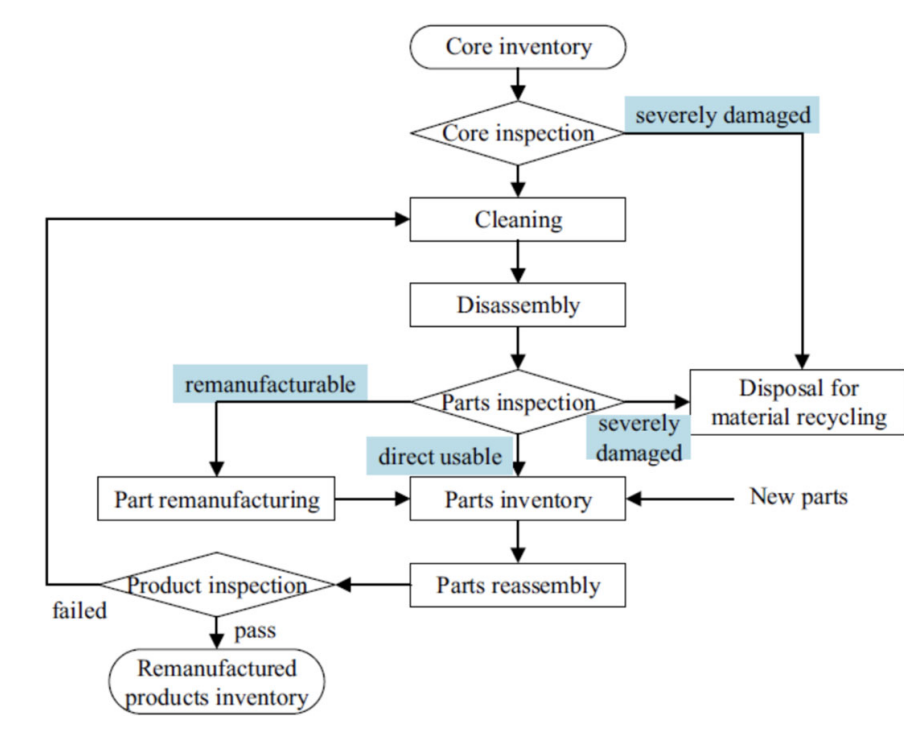
Deep learning enabled computer vision in remanufacturing and refurbishment applications: defect detection and grading for smart phones
Abstract—This work demonstrates the use of Deep Learning-based Computer Vision for Remanufacturing end-of-life consumer electronics products, considering smartphones as the use-case. We implemented automated detection of screen defects such as scratches and cracks. In turn, this could lead to increased reuse of smartphones in a secondary market alongside new ones to meet consumer demand. The refurbishment of smartphone devices is a growing industry heavily dependent on manual labor, making decisions subjective, especially in grading the severity of damage. A critical analysis of defect detection and smartphone grading from a remanufacturing perspective is conducted. This analysis is significant in a remanufacturing sector that deals with dynamically varying input of cores (used products for remanufacturing), characteristics, timing, and number of returns. The solution we propose here is novel in its own right, requiring data analysis and collection, data curing, defect parameterization, and dataset building to enable model-based training and detection experiments. We collected and annotated a dataset to detect and grade the various defects based on their severity. A range of deep learning models was trained on the dataset to obtain baseline results for the state-of-the-art deep learning detection models, including YOLOv7, YOLOv8, YOLO11 variants, and Mask R-CNN. Our experiments also showed improved precision values when the pre-trained models were pre-fine-tuned using a road crack segmentation dataset before training on our phone defect dataset. The inference time for the YOLOv8x model is 8ms. This reduced inference time with a high precision of 70.4% indicates that a consistent, fast, and accurate grading is achieved here, ensuring a high throughput rate in the remanufacturing process and ensuring sustainability.
Enhancing Real-Time Decision-Making and Resilience in Cyber-Physical Systems with Digital Twins for Smart Manufacturing
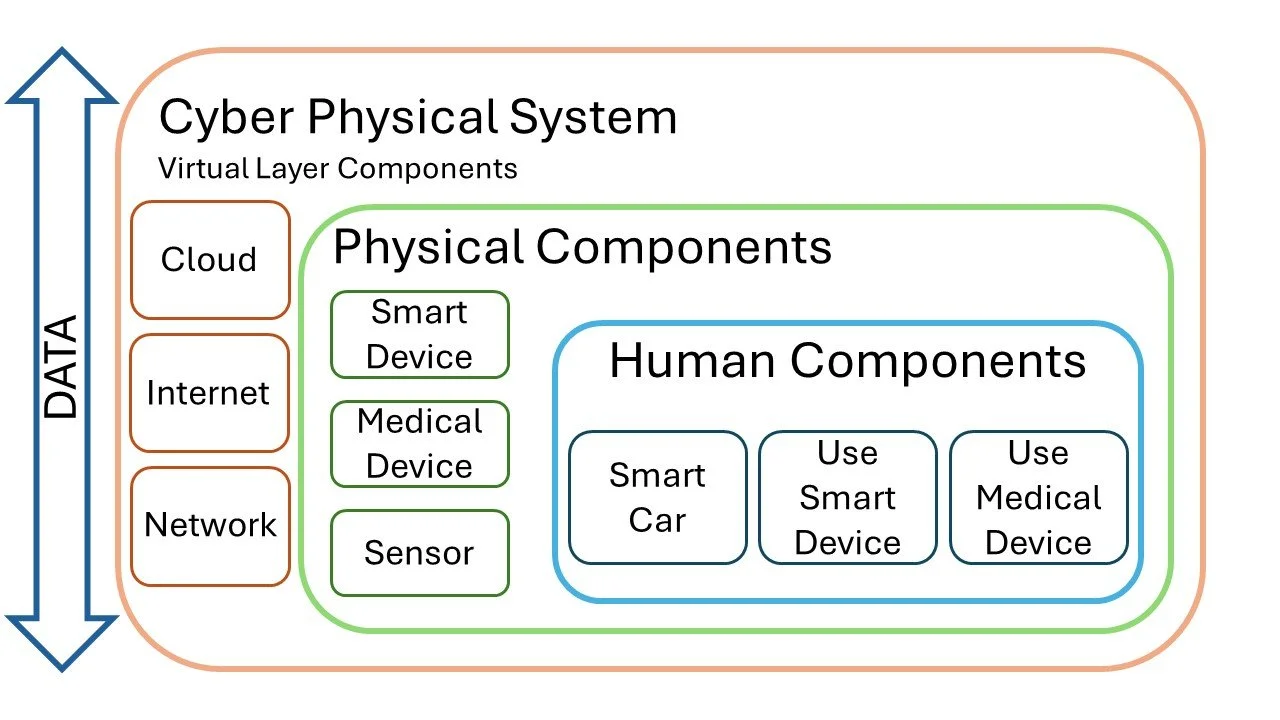
Abstract—Cyber-physical systems (CPS) represent a significant advancement in the integration of computational and physical processes, with impactful applications across industries such as healthcare, manufacturing, transportation, and smart grids. This paper examines the current state of CPS, focusing on key applications, security and privacy challenges, and the complexities of systems integration and interoperability. An extensive literature search synthesizes findings from recent research to outline fundamental CPS concepts and their practical implementations. The paper provides a critical analysis of existing solutions to security vulnerabilities and discusses ongoing efforts to enhance privacy protections within CPS environments. Identified gaps in the current research landscape are presented, alongside potential directions for future investigations. The analysis underscores the necessity for continued innovation and robust security measures to harness the full potential of CPS, ensuring reliability and efficiency in an increasingly interconnected world.
Machine Learning for Healthcare-IoT Security: A Review and Risk Mitigation
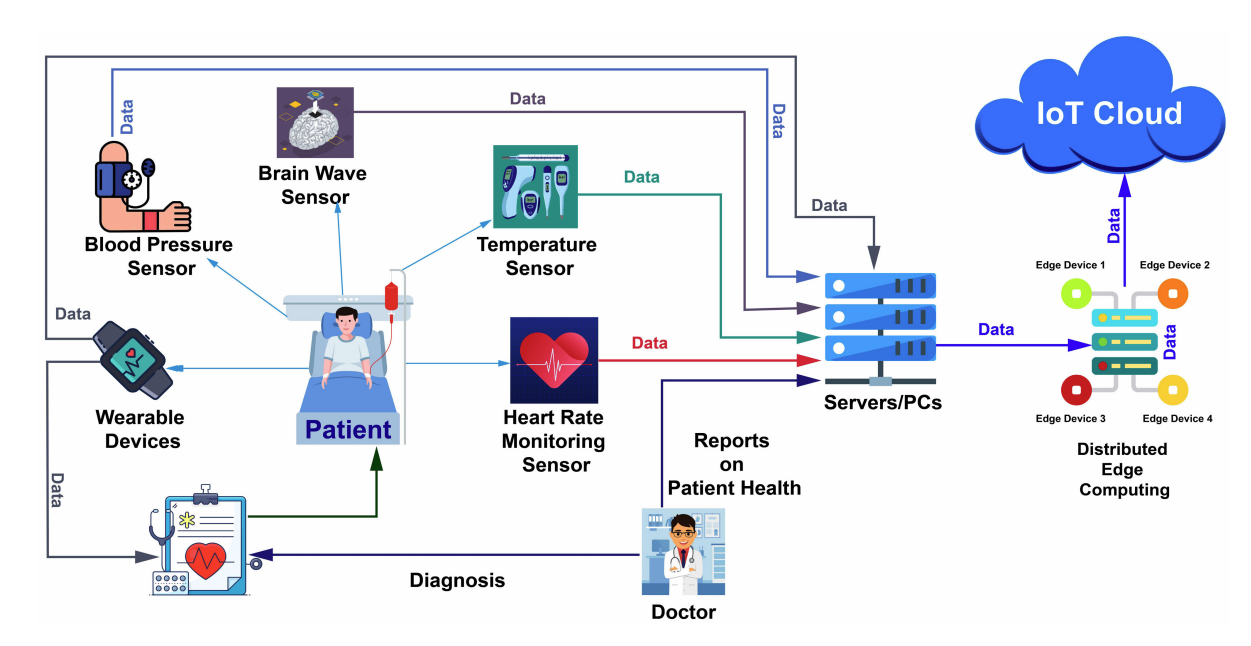
Abstract—The Healthcare Internet-of-Things (H-IoT), commonly known as Digital Healthcare, is a datadriven infrastructure that highly relies on smart sensing devices (i.e., blood pressure monitors, temperature sensors, etc.) for faster response time, treatments, and diagnosis. However, with the evolving cyber threat landscape, IoT devices have become more vulnerable to the broader risk surface (e.g., risks associated with generative AI, 5G-IoT, etc.), which, if exploited, may lead to data breaches, unauthorized access, and lack of command and control and potential harm. This paper reviews the fundamentals of healthcare IoT, its privacy, and data security challenges associated with machine learning and H-IoT devices. The paper further emphasizes the importance of monitoring healthcare IoT layers such as perception, network, cloud, and application. Detecting and responding to anomalies involves various cyber-attacks and protocols such as Wi-Fi 6, Narrowband Internet of Things (NB-IoT), Bluetooth, ZigBee, LoRa, and 5G New Radio (5G NR). A robust authentication mechanism based on machine learning and deep learning techniques is required to protect and mitigate H-IoT devices from increasing cybersecurity vulnerabilities. Hence, in this review paper, security and privacy challenges and risk mitigation strategies for building resilience in H-IoT are explored and reported.